
Montessori education, detailed in numerous PDF guides, emphasizes child-led learning and a prepared environment. Research from 2024 highlights its benefits, particularly for children with learning differences.
Historical Background of the Montessori Approach
The Montessori Method originated with Dr. Maria Montessori, an Italian physician and educator, in the early 20th century. Her pioneering work began with observing children in a Roman housing project, leading to the opening of her first “Casa dei Bambini” (Children’s House) in 1907.
Montessori’s approach diverged from traditional teaching methods, focusing on self-directed activity, hands-on learning, and respecting a child’s natural psychological development. Early PDF documents, like her book “The Montessori Method” (Project Gutenberg), detailed her observations and pedagogical principles.
She challenged conventional beliefs about education, advocating for a child-centered environment that fostered independence and concentration. Her success in teaching young children to write, as documented in her writings, prompted a re-evaluation of educational practices. The method quickly gained international recognition, and continues to evolve, with modern resources available in PDF format for educators today.
Maria Montessori’s Core Principles

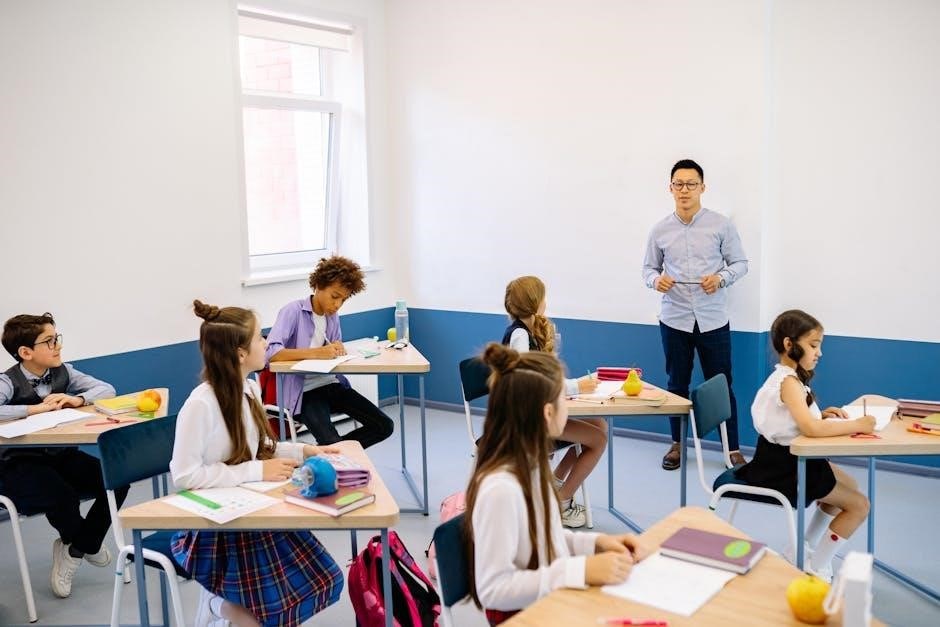
Central to the Montessori Method, detailed in accessible PDF guides, is the belief in the child’s inherent ability to learn. A key principle is the “prepared environment,” designed to encourage independence and exploration. This environment offers specifically designed materials that cater to different developmental stages.
Another core tenet is self-directed learning, where children choose activities based on their interests, fostering intrinsic motivation. The role of the teacher shifts from instructor to guide, observing and supporting the child’s learning journey; Concentration, as highlighted in “The Objective Standard,” is achieved through engagement with materials, not direct instruction.
Montessori emphasized sensitive periods – specific times when children are particularly receptive to learning certain skills. Furthermore, the method promotes mixed-age classrooms, allowing peer learning and mentorship. These principles, readily available in PDF resources, form the foundation of this unique educational philosophy.
The Relevance of Montessori in Modern Education
Despite its origins over a century ago, the Montessori Method, comprehensively documented in numerous PDF resources, remains remarkably relevant today. In a world increasingly focused on standardized testing, Montessori’s emphasis on individualized learning and fostering a love of knowledge offers a valuable alternative.
The method’s focus on practical life skills and sensorial exploration prepares children for real-world challenges. Furthermore, its proven effectiveness with children facing learning differences, as detailed in recent research (2024 PDF), addresses the needs of diverse learners. The application of Montessori principles extends beyond early childhood, even informing adult language learning, as evidenced by project guides available online.
The emphasis on concentration – achieved through material engagement – combats the distractions of the digital age. Access to PDF guides and online resources makes the Montessori approach increasingly accessible to educators and parents seeking a holistic and child-centered educational philosophy.

Core Components of the Montessori Method
Montessori’s core lies in the prepared environment, self-directed learning, and the teacher as a guide – all extensively detailed within available PDF resources.
The Prepared Environment
Central to the Montessori method, as outlined in numerous PDF guides and research, is the concept of a “prepared environment.” This isn’t simply a tidy classroom; it’s a carefully curated space designed to foster independence, concentration, and a love of learning. The environment is scaled to the child’s size, offering accessible materials arranged with intention.
Materials are presented sequentially, building upon previously mastered skills. Order and beauty are paramount, contributing to a sense of calm and focus. The environment supports exploration and discovery, allowing children to choose activities that resonate with their individual interests and developmental needs.
Crucially, the prepared environment isn’t static. It evolves based on the children’s progress and interests, constantly adapting to meet their changing needs. This dynamic quality, thoroughly explained in Montessori literature, ensures continued engagement and optimal learning opportunities. Concentration flourishes when children interact with these materials, not without them.
Self-Directed Learning and Freedom of Choice
A cornerstone of the Montessori method, detailed extensively in available PDF resources, is the emphasis on self-directed learning. Children are not passively receiving information but actively constructing their knowledge through exploration and independent work. This is facilitated by the freedom of choice within the prepared environment.
Students select activities that appeal to them, fostering intrinsic motivation and a deeper engagement with the material. This isn’t unstructured playtime; choices are made within defined parameters and with access to carefully designed materials. The teacher, acting as a guide, observes and intervenes only when necessary, supporting the child’s learning journey.
This freedom cultivates responsibility, concentration, and problem-solving skills. As highlighted in Montessori’s writings, concentration is most effectively achieved with materials, not through direct instruction alone. Allowing children agency over their learning empowers them to become confident, self-motivated individuals.
The Role of the Montessori Teacher (Guide)
Unlike traditional teaching models, the Montessori teacher functions primarily as a guide or facilitator, a concept thoroughly explained in PDF guides on the method. Their role isn’t to lecture or direct, but to observe each child’s individual needs and learning style. They prepare the environment, introducing materials and demonstrating their proper use, then step back to allow independent exploration.
The guide carefully monitors progress, offering support and challenges as needed, ensuring children remain engaged and appropriately stimulated. Training, as detailed in certification resources, emphasizes observation skills and understanding child development.
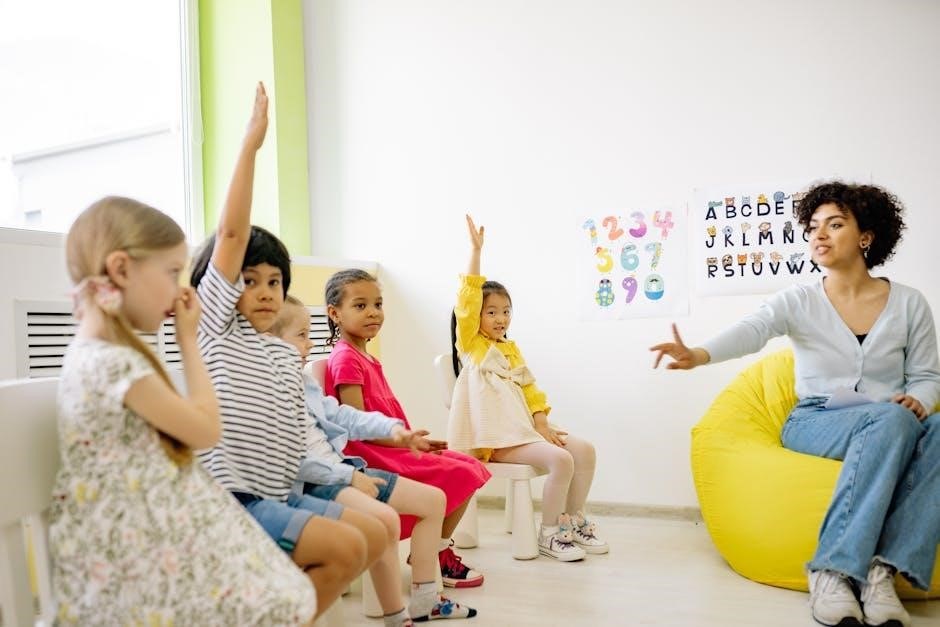
For children with learning differences, the guide’s role is even more crucial, potentially utilizing Multisensory Structured Language approaches. They adapt work cycles and provide individualized assistance, fostering a supportive and inclusive learning environment. The teacher’s expertise lies in knowing when to intervene and how to guide, rather than simply telling.
Montessori Materials and Curriculum
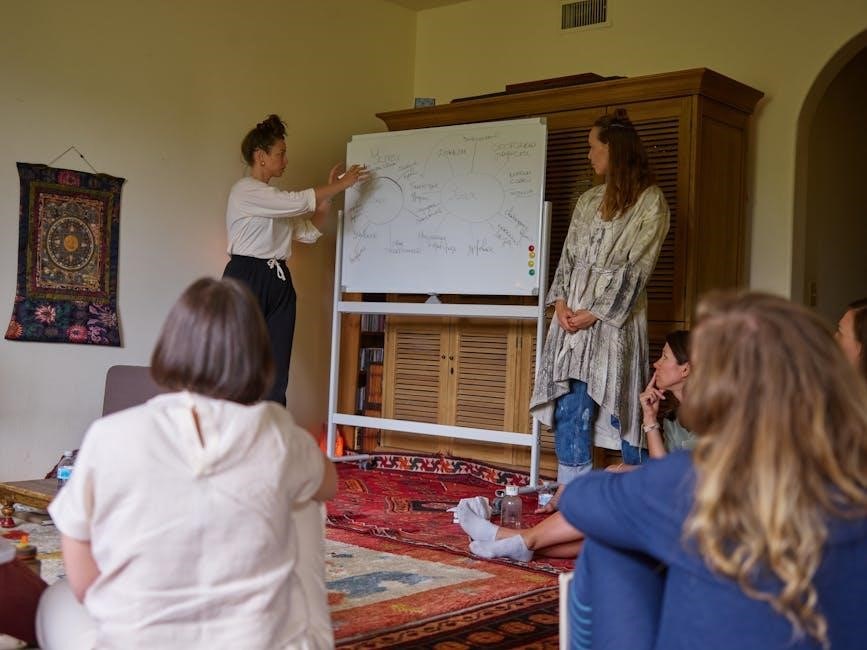
Montessori utilizes specifically designed, hands-on materials, detailed in PDF resources, fostering self-directed learning across practical life, sensorial, and academic areas.
Practical Life Exercises
Practical Life Exercises form a cornerstone of the Montessori approach, readily explained in available PDF guides. These activities, seemingly simple, are meticulously designed to cultivate independence, concentration, and coordination in young children. They encompass everyday tasks like pouring, spooning, buttoning, polishing, and food preparation.
These exercises aren’t merely about mastering a skill; they’re about developing the child’s ability to focus, complete a task from beginning to end, and take pride in their accomplishments. The materials themselves are often beautiful and child-sized, encouraging careful handling and a sense of order.
Furthermore, these activities indirectly prepare children for more advanced academic work by strengthening fine motor skills and fostering a sense of responsibility. Resources emphasize that concentration flourishes when children are actively engaged with these tangible materials, rather than relying solely on direct instruction;
Sensorial Materials and Development
Sensorial Materials, extensively detailed in Montessori method teaching PDF resources, are designed to refine each sense – visual, auditory, olfactory, gustatory, and tactile – through carefully crafted exercises. These aren’t about labeling; they’re about isolating specific qualities like color, shape, size, texture, and weight.
Materials like the Pink Tower, Brown Stair, and Color Tablets allow children to discriminate between subtle differences, building a foundation for abstract thinking. The objective isn’t memorization, but internalizing sensory experiences. This process supports cognitive development by strengthening neural pathways.
The emphasis on concentration, as highlighted in various studies, is crucial. Children engage deeply with these materials, fostering self-discipline and a love of learning. These materials prepare the child for later academic concepts, providing a concrete understanding before moving to symbolic representation.
Language Curriculum in Montessori
The Montessori language curriculum, thoroughly outlined in available method teaching PDF guides, follows a natural progression, beginning with practical preparation for writing before formal reading instruction. This approach acknowledges the inherent connection between hand movements and cognitive development.
Early exercises focus on phonetic awareness – sounds and their corresponding symbols – using materials like the Sandpaper Letters. Children trace the letters, associating the tactile experience with the sound. This multisensory approach, particularly beneficial for children with language disorders, builds a strong phonetic foundation.
Reading emerges organically as children begin to decode words they’ve already “written” through phonetic analysis. The curriculum emphasizes a holistic approach, integrating spoken language, writing, and reading in a meaningful context, fostering a genuine love for language.
Early Writing Skills Development
Montessori method teaching PDF resources detail how early writing isn’t about immediate letter formation, but preparation. Children begin with practical life exercises – transferring, pouring, and manipulating objects – building fine motor skills and hand-eye coordination crucial for writing.
Next, they engage with sensorial materials, refining their sense of touch and spatial awareness. This groundwork leads to pre-writing activities like tracing sandpaper letters, associating the tactile sensation with phonetic sounds. This multisensory approach, as highlighted in research, is particularly effective.
Only after this preparation do children progress to forming letters independently, initially using movable alphabets to construct words before transitioning to pencil and paper. This gradual, sequential approach fosters confidence and a genuine understanding of the writing process.
Reading Curriculum and Phonetic Awareness
Montessori method teaching PDF guides emphasize a phonetic approach to reading, building from sounds to letters. Children aren’t taught to memorize whole words initially; instead, they learn to decode by blending individual sounds (phonemes). This aligns with multisensory learning, connecting sounds with visual symbols and tactile experiences.
The curriculum utilizes materials like sandpaper letters, allowing children to trace the shape while associating it with its sound. Movable alphabets are then used to build simple words, reinforcing phonetic principles. Resources detail how this method addresses potential reading difficulties early on.
Reading progresses organically as children gain confidence in decoding. The focus remains on understanding the relationship between sounds and letters, fostering independent reading skills and a love for literature, as Maria Montessori advocated.

Montessori for Children with Learning Differences
Montessori method teaching PDF resources show its effectiveness for diverse learners, especially those with oral and written language disorders, through multisensory approaches.
Montessori and Multisensory Learning

Montessori’s approach intrinsically aligns with multisensory learning principles, as evidenced in available PDF guides detailing the pedagogy. The method doesn’t rely solely on auditory or visual instruction; instead, it actively engages children through tactile, kinesthetic, and concrete experiences. Materials are designed to be manipulated, fostering a deeper understanding of concepts.
Research, including a 2024 study referenced in online resources, emphasizes the benefits for children with oral and written language disorders when a Montessori environment is coupled with a Multisensory Structured Language approach. This combination addresses diverse learning styles and strengthens neural pathways. The prepared environment, central to Montessori, provides a rich array of materials that cater to different sensory modalities, promoting concentration and independent exploration. Concentration, as noted in The Objective Standard, is directly linked to engagement with the materials themselves.
Supporting Children with Oral and Written Language Disorders
Montessori education, as detailed in numerous PDF resources, offers significant support for children facing oral and written language challenges. The method’s emphasis on individualized learning and concrete materials allows for tailored interventions. A 2024 study highlights the effectiveness when Montessori principles are combined with a Multisensory Structured Language approach, specifically addressing phonological awareness and decoding skills.
PDF guides emphasize the importance of trained Montessori educators who can adapt work cycles and provide targeted support. Considerations for classroom assistants, as outlined in research, include understanding the child’s specific needs and facilitating access to appropriate materials. The method’s focus on building foundational skills – through practical life and sensorial exercises – creates a strong base for language development. Careful observation and individualized lesson planning are crucial for maximizing success, ensuring at-risk students receive the necessary scaffolding.
Adapting Work Cycles for At-Risk Students
PDF resources on the Montessori method emphasize flexibility in work cycles for students requiring additional support. Traditional three-hour uninterrupted work periods may be challenging; shorter, focused segments are often more effective. Research suggests breaking down tasks into smaller, manageable steps, allowing for frequent check-ins and positive reinforcement. This approach minimizes frustration and builds confidence.
Adapting the cycle involves careful observation by the teacher, as detailed in various PDF guides, to identify optimal attention spans and learning styles. Providing a structured environment with clear expectations is vital. The 2024 study highlights the role of “special guides” in tailoring work to individual needs. Incorporating movement breaks and multi-sensory activities can also enhance engagement. Ultimately, the goal is to create a supportive learning experience that fosters independence and progress at a pace suitable for each at-risk student.
Implementing the Montessori Method
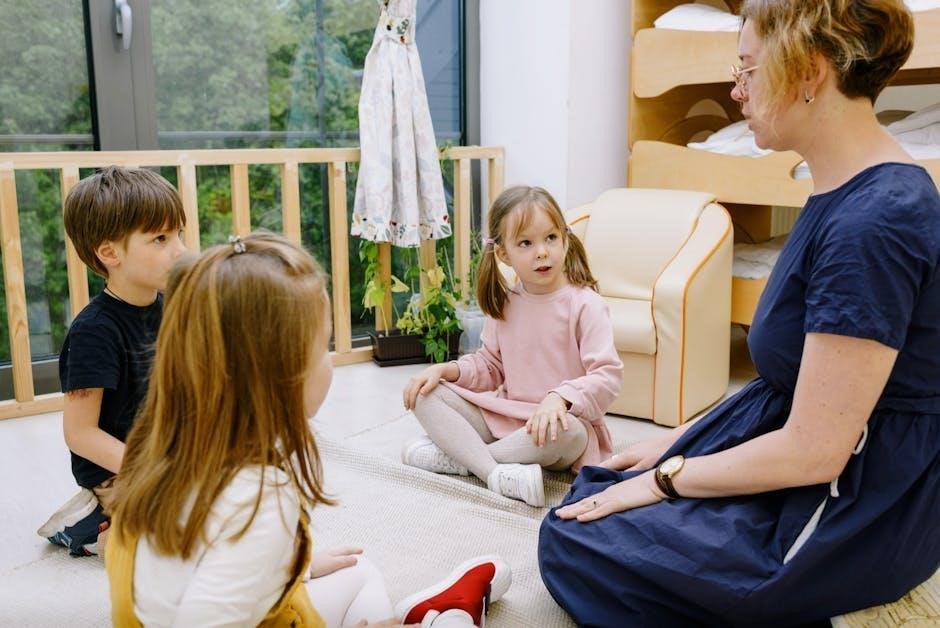
Montessori implementation requires specialized teacher training and certification, detailed in PDF guides. Successful integration also considers the crucial role of classroom assistants.
Training and Certification for Montessori Teachers
Montessori teacher training is a rigorous process, often detailed in comprehensive PDF manuals available online. These programs, varying in length and focus (Infant/Toddler, Primary, Elementary), emphasize not just pedagogical techniques but also a deep understanding of child development as outlined by Maria Montessori herself.
Certification is typically granted by accredited organizations like Association Montessori Internationale (AMI) or American Montessori Society (AMS). The training covers the philosophy, methodology, and practical application of the Montessori method, including detailed study of the materials and observation skills.
Many programs now offer blended learning options, combining in-person instruction with online resources and PDF study materials. Continued professional development is also encouraged to stay current with best practices and adapt the method to diverse learning needs. Accessing these resources is vital for effective implementation.
Considerations for Classroom Assistants
Classroom assistants play a crucial supportive role in a Montessori environment, often guided by detailed handbooks available as PDF downloads. Their training, while not as extensive as the lead teacher’s, should focus on understanding Montessori principles and the specific needs of the children.
Assistants help maintain the prepared environment, prepare materials, and observe children, relaying observations to the lead teacher. A key consideration, highlighted in recent research (2024), is specialized training in supporting children with learning differences, particularly those with oral or written language disorders.
Effective assistants understand the importance of indirect guidance and allowing children to explore independently. Access to PDF resources outlining specific exercises and observation techniques is essential. Clear communication and collaboration with the lead teacher are paramount for a cohesive and supportive learning experience.
Applying Montessori Principles to Adult Language Learning
Surprisingly, Montessori principles translate effectively to adult education, particularly in language acquisition. A PDF guidebook from 2021 details a manual for applying the method to adult learners, emphasizing self-directed learning and individualized pacing. This approach moves away from traditional, teacher-centered instruction.
Key elements include a prepared learning environment with accessible materials, allowing adults to choose activities aligned with their interests and needs. The role of the instructor shifts to that of a guide, offering support and observation rather than direct lecturing.
Focusing on practical application and hands-on exercises, mirroring Montessori’s “practical life” exercises, enhances engagement and retention. Utilizing multisensory materials, as advocated in various PDF resources, caters to diverse learning styles and promotes deeper understanding of the target language.

Resources and Further Exploration
Numerous Montessori method PDFs and guides are available online, including research from ResearchGate and project partner manuals, offering deeper insights into the pedagogy.
Accessing Montessori Method PDFs and Guides
A wealth of information regarding the Montessori method is readily available in PDF format. ResearchGate hosts valuable resources, including guides for applying Montessori principles to adult language education, published as recently as 2021. Furthermore, detailed articles, such as those exploring the Montessori pedagogy as a multi-sensory approach to childhood education (dated November 30, 2024), provide insights into supporting children with oral and written language disorders.
Classic texts, like Maria Montessori’s “The Montessori Method” available through Project Gutenberg, offer foundational understanding. These resources often detail practical applications and theoretical underpinnings. Exploring these PDFs allows educators and parents to delve deeper into the method’s core principles and implementation strategies, fostering a more comprehensive grasp of this educational approach.
Online Resources for Montessori Education
Beyond PDF downloads, numerous online platforms support Montessori education. Websites like www.theobjectivestandard.com (Summer 2010) offer articles discussing the crucial role of materials in fostering concentration – a cornerstone of the Montessori approach. ResearchGate serves as a hub for scholarly articles, including those detailing adaptations for students with learning differences and the application of the method to adult language learning.
Accessing these resources provides current research and practical insights. While specific websites may evolve, a focused online search for “Montessori method” yields a diverse range of blogs, forums, and official Montessori organization websites. These platforms often feature downloadable guides, training information, and community support, supplementing the foundational knowledge gained from PDF documents.
The Importance of Concentration and Materials
Central to the Montessori method, as detailed in available PDF resources, is the understanding that concentration flourishes when children engage with specifically designed materials. Articles, such as those found on www.theobjectivestandard.com, emphasize that concentration isn’t imposed but emerges through purposeful interaction with the learning environment.
The materials aren’t merely tools; they are catalysts for focused attention. Maria Montessori’s work, accessible through resources like Project Gutenberg’s eBook, highlights how carefully crafted exercises facilitate self-directed learning. The absence of materials, conversely, hinders a child’s ability to concentrate. This principle underscores the necessity of a ‘prepared environment’ rich in engaging, age-appropriate resources, fostering intrinsic motivation and deep learning.